
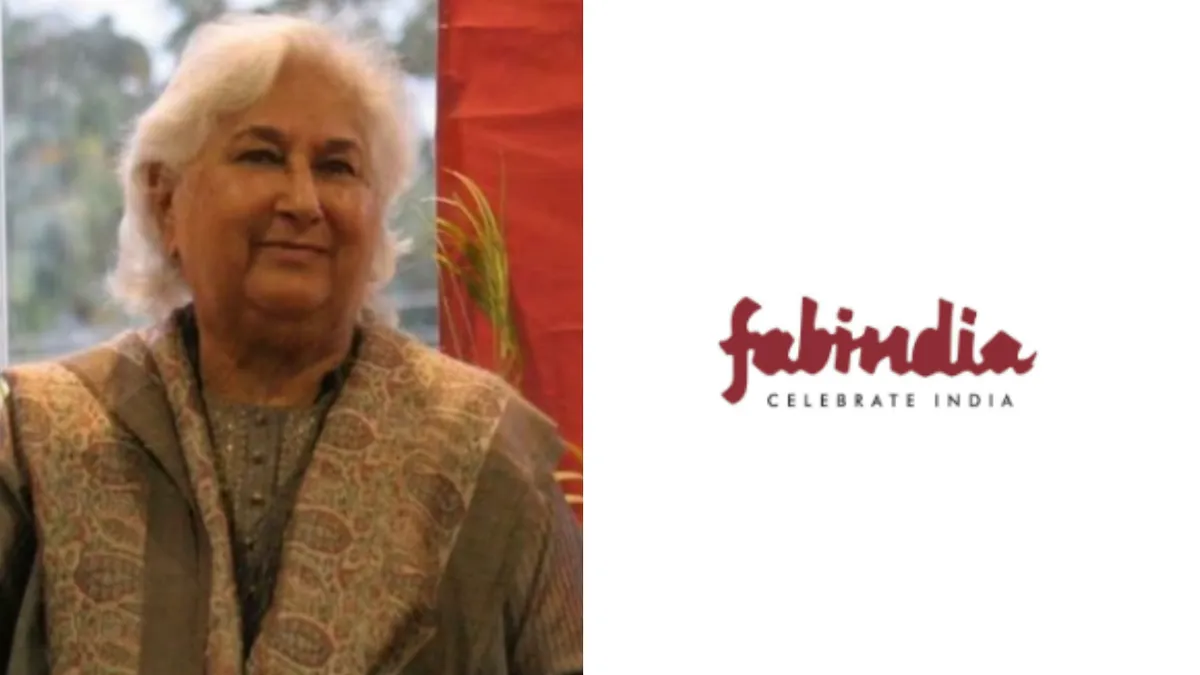
Bim Bissell, a pivotal figure in promoting Indian handicrafts and sustainable livelihoods, passed away on Thursday at the age of 93. As the wife of John Bissell, founder of FabIndia, Bim played a significant role in transforming the company into a global brand synonymous with Indian craftsmanship and heritage. Her relentless efforts to uplift rural artisans and preserve traditional crafts have left an enduring legacy.
Early Life and Career
Born Bimla Nanda, Bim’s early life was steeped in education and social work. She began her professional journey as a social secretary to U.S. Ambassadors in India, including John Kenneth Galbraith and Chester Bowles. Her keen interest in cross-cultural relations and development led her to a career at the World Bank, where she worked for over two decades, focusing on developmental projects in India. These experiences enriched her understanding of grassroots-level challenges and prepared her for her later contributions to FabIndia and beyond.
Bim’s association with the World Bank also influenced her perspective on rural development and women’s empowerment. Her work often emphasized creating opportunities for marginalized communities, particularly women, to gain financial independence and recognition.


Founding of Udyogini
In 1992, Bim leveraged her extensive experience in developmental projects to establish Udyogini, an NGO dedicated to empowering assetless and landless women in India. Collaborating with Ela Bhatt of SEWA, Bim’s vision for Udyogini was to provide business training and support to women entrepreneurs, fostering sustainable livelihoods. The NGO’s initiatives have since helped thousands of women in rural areas to access skills, resources, and markets, enabling them to achieve self-reliance.
Udyogini became a testament to Bim’s commitment to gender equality and rural development. It emphasized building women’s capacities in business and leadership, addressing systemic issues that hinder women’s participation in the workforce. Her work at Udyogini was recognized nationally and internationally, inspiring similar efforts across India.
Contribution to FabIndia
Bim Bissell’s influence on FabIndia was profound and transformative. While her husband, John Bissell, laid the foundation of the company in 1960, Bim brought a unique vision that shaped its mission to preserve Indian crafts while creating sustainable livelihoods for artisans. FabIndia became a bridge between traditional craftspeople and the modern market, offering rural artisans a platform to showcase their work and earn fair wages.
Under Bim’s guidance, FabIndia expanded its offerings, incorporating handwoven textiles, hand-printed fabrics, and handmade products that celebrated India’s rich cultural heritage. Her emphasis on ethical sourcing and fair trade practices ensured that the artisans were not only compensated fairly but also gained recognition for their skills. This approach turned FabIndia into a model for businesses aiming to balance profitability with social impact.
Her efforts went beyond the operational aspects of the company. Bim actively advocated for the importance of sustaining traditional crafts in a world increasingly leaning towards mechanization. Her leadership helped position FabIndia as a global ambassador for Indian heritage, inspiring other organizations to adopt similar models of sustainable and inclusive growth.
Personal Style and Influence
Bim Bissell was not just a force behind the scenes; her personal style and charisma left a lasting impression on everyone who knew her. Often seen in elegant handloom sarees and adorned with her signature silver jewelry, Bim embodied the ethos of FabIndia. Her silver bangles and gifted handcrafted items became symbolic of her dedication to preserving Indian crafts.
Friends and colleagues remember her as a striking and graceful woman who carried herself with poise. Sakina Mehta, wife of the late artist Tyeb Mehta, recalled Bim’s charm and generosity, mentioning how she gifted her silver buttons, a testament to her thoughtfulness and passion for craftsmanship. Bim’s commitment to Indian textiles and jewelry wasn’t just professional—it was deeply personal.
Educational Initiatives
In addition to her work with artisans and rural development, Bim was deeply passionate about education. She ran the Playhouse School, an initiative that focused on nurturing young minds and fostering holistic development. Her involvement in setting up the Sunder Nursery’s Playhouse in Delhi showcased her dedication to creating spaces that brought joy and learning to children.
The Playhouse, with its unique slides and swings, became a popular spot for children in Delhi, reflecting Bim’s vision of combining functionality with beauty. Her contributions to such initiatives demonstrated her belief in the power of education and community development.
Tradition and Vision Defined Her Work
Bim once remarked, “Tradition to me is the best of our heritage.” This belief guided her work at FabIndia and her broader efforts to preserve Indian cultural practices. She championed the integration of traditional crafts into contemporary fashion, ensuring that these age-old techniques remained relevant in a rapidly modernizing world.
Her vision extended beyond the preservation of crafts. Bim believed in making these traditions accessible and inclusive, emphasizing their role in fostering sustainable livelihoods. Her work at FabIndia was a reflection of this ethos, blending tradition with modernity in a way that resonated globally.
A Life of Multifaceted Contributions
Bim’s influence wasn’t confined to any single domain. From her work at the World Bank to her contributions to FabIndia and her founding of Udyogini, her life was a mosaic of impactful initiatives. She also played a crucial role in community projects, such as helping secure funds to set up the Sunder Nursery’s Playhouse, which continues to delight children and families.
Her ability to merge her professional expertise with her passion for social causes set her apart. Bim’s multifaceted contributions have inspired generations of social workers, entrepreneurs, and artisans to think beyond traditional boundaries and embrace innovation in preserving cultural heritage.
A Lasting Legacy
Bim Bissell’s passing marks the end of an era for the FabIndia family and the Indian craft community. Her work touched countless lives, from the artisans she supported to the consumers who cherish FabIndia’s products. Her efforts to blend social impact with business sustainability have set a benchmark for organizations across the globe.
Though she is no longer with us, Bim’s legacy lives on in the thriving traditions she helped preserve and the countless artisans whose lives she transformed. Her story is a reminder of the power of vision, compassion, and dedication in creating meaningful change.