

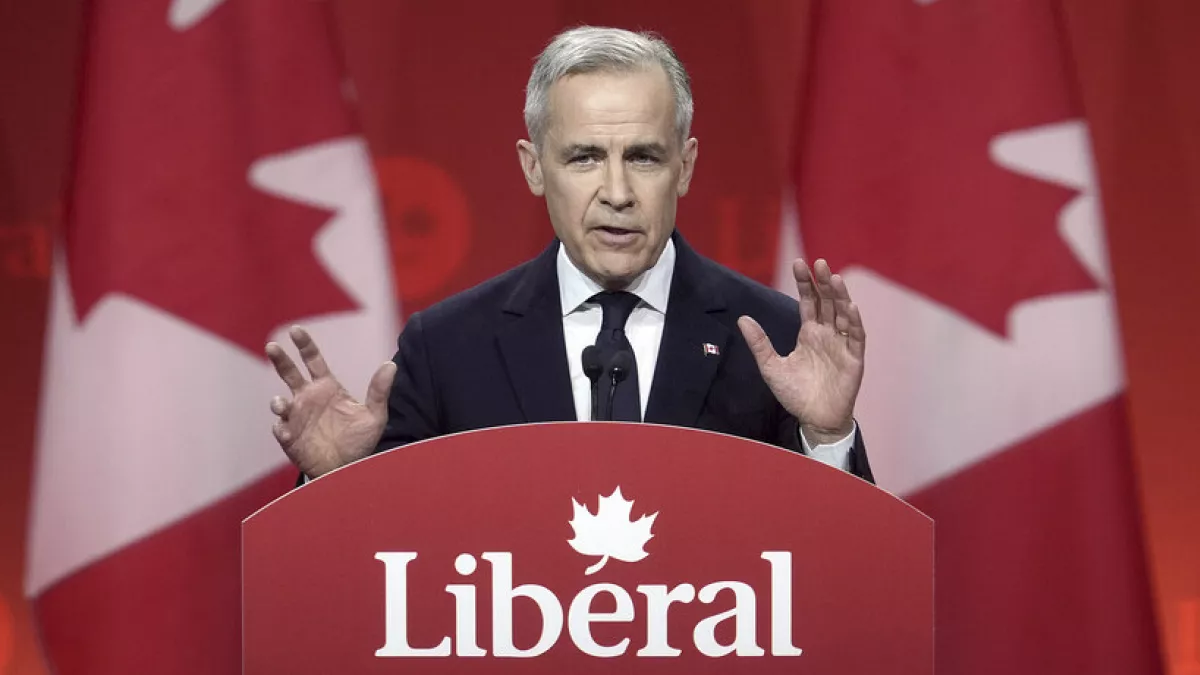
A major political shift is about to reshape Canada. Mark Carney, a former Governor of the Bank of Canada and an internationally recognized economist, is set to become the country’s next Prime Minister. His appointment follows the resignation of Justin Trudeau, who has led the nation since 2015 but faced declining approval ratings and internal party struggles.
Carney’s transition from the financial world to political leadership is a significant moment in Canadian history. While he is respected for his economic expertise, his lack of political experience raises questions about his ability to lead a country facing economic and social challenges.
Will his background in finance make him a strong leader, or will his lack of political experience become a major hurdle?
Who Is Mark Carney?
Mark Carney is not a traditional politician, but he is well-known in global financial circles. Born in Fort Smith, Northwest Territories, Canada, Carney’s early life was shaped by discipline and ambition. He won a scholarship to Harvard University, where he studied economics, before earning a PhD from Oxford University.
His professional career began at Goldman Sachs, one of the world’s largest investment banks. Over more than a decade, he gained experience in financial markets, crisis management, and global economics. However, he found his true calling in public service.
Carney’s rise to prominence came when he became the Governor of the Bank of Canada in 2008—right before the global financial crisis. His leadership during this time was widely praised, as Canada emerged from the crisis with a relatively strong and stable economy. In 2013, he was appointed Governor of the Bank of England, becoming the first non-British person to hold the role. His tenure was marked by his handling of Brexit-related economic challenges and his strong advocacy for sustainable finance and climate policies.
While Carney has spent years advising world leaders and shaping economic policy, stepping into the role of Prime Minister requires an entirely different skill set. Political leadership involves not just economic expertise but also public trust, negotiation, and the ability to navigate party politics.
What Led to Trudeau’s Resignation?
Justin Trudeau’s journey as Prime Minister started with overwhelming public support. In 2015, he positioned himself as a progressive leader focused on diversity, climate action, and social policies. However, over time, his popularity took a significant hit.
Here are the key reasons behind his resignation:
- Multiple Ethics Scandals
Trudeau’s reputation was repeatedly damaged by ethics scandals. The SNC-Lavalin affair was one of the most controversial, where he was accused of pressuring a justice minister to help a company avoid prosecution. Other incidents, such as the WE Charity scandal, further eroded public trust.
- Economic Struggles and Rising Cost of Living
Under Trudeau’s leadership, Canada faced economic challenges, particularly in recent years. Inflation surged, housing affordability worsened, and many Canadians struggled with high living costs. Despite government initiatives, economic frustrations grew, impacting Trudeau’s approval ratings.
- COVID-19 Aftermath and Government Spending
While Trudeau’s response to the COVID-19 pandemic was initially well-received, the long-term impact of government spending led to concerns about national debt and economic stability. Many Canadians started questioning whether his policies were sustainable in the long run.
- Party Discontent and Internal Pressure
Within the Liberal Party, dissatisfaction with Trudeau’s leadership had been growing. Many members believed that a fresh face was needed to strengthen the party’s position before the next election. This internal pressure played a major role in his decision to step down.
- Declining Public Support and Conservative Opposition
Recent polls indicated that Trudeau’s popularity had declined significantly. The opposition, led by Pierre Poilievre of the Conservative Party, was gaining momentum. Faced with the possibility of electoral defeat, Trudeau’s resignation became inevitable.
His departure opened the door for a new leader.
How Did Carney Rise to Power?

Mark Carney’s move into politics wasn’t sudden. For years, he had been positioning himself as a potential leader, aligning with the Liberal Party and making strategic public appearances.
- Unofficial Political Advisor
Though Carney was not an official politician, he had been advising Liberal governments on economic and climate policies. His views on sustainable finance and global economic stability made him a respected voice in government circles.
- Public Speaking and Media Presence
Over the past few years, Carney increased his public appearances, participating in economic forums and interviews. This allowed him to build a public image beyond finance and establish himself as a thought leader on broader policy issues.
- Trudeau’s Endorsement (Direct or Indirect)
While Trudeau never explicitly endorsed Carney as his successor, political insiders suggest that Carney had the backing of key figures within the Liberal Party. His appointment was seen as a strategic move to restore confidence in the party.
- Lack of Strong Liberal Alternatives
With Trudeau stepping down, the Liberal Party needed a leader who could command public confidence and take on the rising Conservative opposition. Carney’s reputation as an economic expert made him an appealing choice, despite his lack of political experience.
What Challenges Will Carney Face?
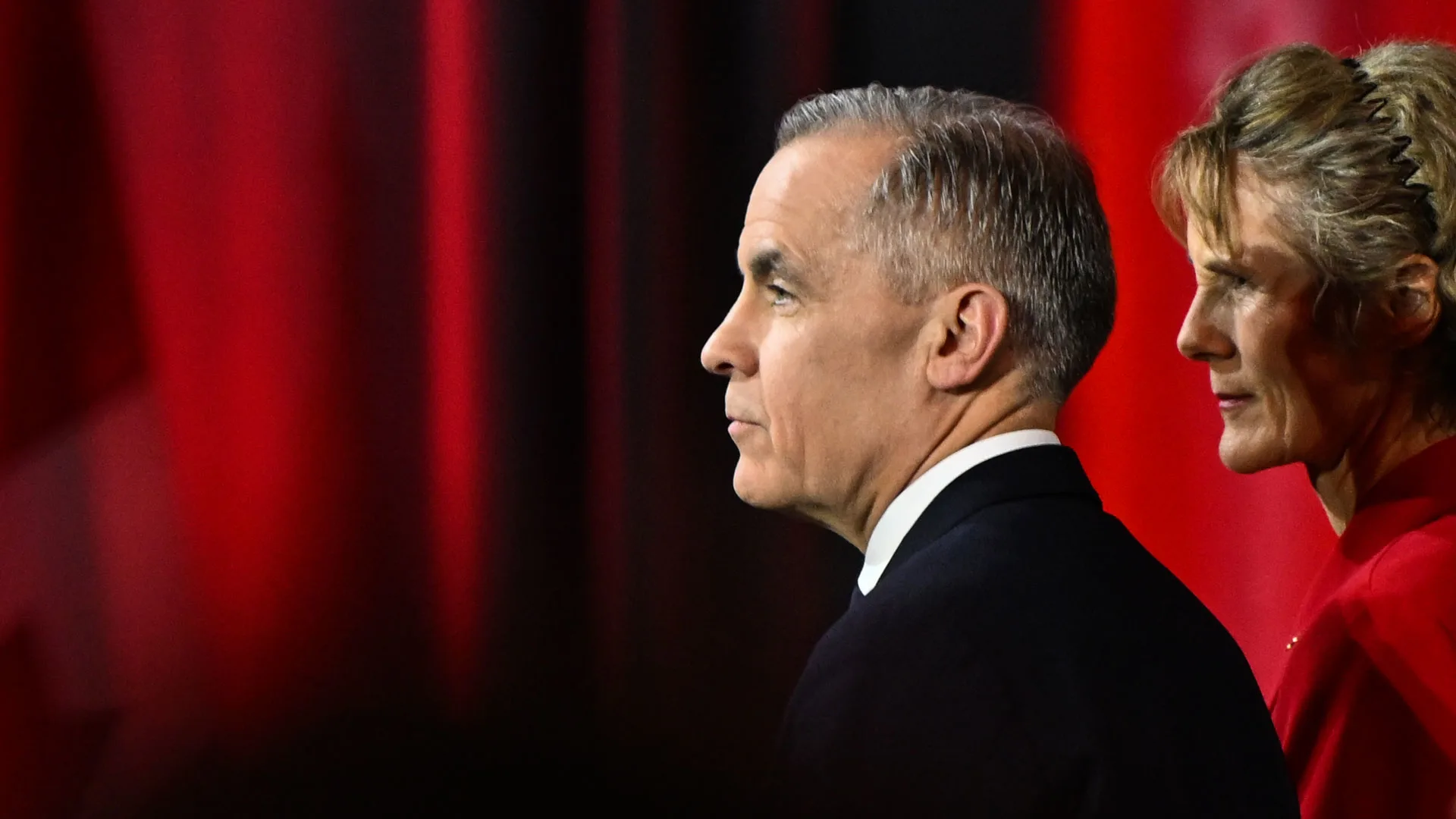
Stepping into the role of Prime Minister brings immense pressure. Carney will have to navigate Canada’s political landscape while addressing urgent economic and social issues.
- Economic Stability and Inflation Control
Canada’s economy is at a critical point, with inflation, housing crises, and job market instability affecting millions. While Carney’s economic background gives him an advantage, implementing policies that benefit the public—without political backlash—will be a challenge.
- Public Trust and Political Legitimacy
Carney is seen as an outsider in politics. While his expertise is respected, many Canadians may question whether he truly understands the concerns of everyday citizens. He will need to build trust and establish himself as a leader who listens to the people.
- Conservative Opposition and Political Attacks
The Conservative Party, led by Pierre Poilievre, has been gaining ground. Carney will face strong opposition and will need to prove that he is not just an “elitist banker” but a leader who can represent all Canadians.
- Climate Policy and Green Economy Initiatives
Carney is known for his commitment to climate action and sustainable finance. However, balancing aggressive climate policies with economic growth will require careful negotiation, especially with industries that rely on traditional energy sources.
- Unifying the Liberal Party and Preparing for Elections
With Trudeau gone, the Liberal Party must rebuild and strengthen its position. Carney will need to unite party members, regain voter confidence, and prepare for future elections.
Why This Matters for Canada

Canada is entering a new political era. Carney’s leadership represents a shift from traditional political backgrounds to technocratic expertise. His economic knowledge could be an asset, but leading a country is about more than financial strategy—it requires political skill, public engagement, and strong decision-making.
His appointment will have major implications for Canada’s economy, climate policies, and global position. Whether he succeeds or struggles will determine the country’s direction for years to come.
Final Thoughts: Can Carney Deliver?
Mark Carney’s rise to power is a bold experiment. He is stepping into one of the most demanding leadership roles without traditional political experience. While his financial expertise is unquestionable, his ability to handle political pressures, public concerns, and party dynamics remains uncertain.
The next few months will be critical. If Carney can successfully transition into political leadership, he may emerge as a transformative figure in Canadian politics. If not, his tenure may be short-lived, paving the way for the opposition to take control.
One thing is certain—Canada’s political landscape is changing, and all eyes will be on Carney as he takes on the challenge of leading a nation in uncertain times.